Inspection, Testing & Assaying
Gold Valuation — Weight, Fineness & the LBMA Gold Price
What is this gold worth today? We answer from three figures we can stand behind — the weight we recorded, the fineness we tested or confirmed with the laboratory, and the LBMA Gold Price on the agreed date — and show the calculation line by line, so that buyer and seller can both check it.
Scope
- Turnaround
- Issued on the day of testing for an indicative value; within one working day of the assay certificate for a settlement value.
- Coverage
- 7 countries, and anywhere in Africa
- Standards
- Inspection to the requirements of ISO/IEC 17020; laboratories accredited to ISO/IEC 17025
Most disagreements over the price of gold are really disagreements over weight and fineness. A valuation built on the seller’s figures inherits whatever is wrong with them. Ours uses only weights recorded by our own tester on a calibrated scale, and a fineness that we have measured or confirmed directly with the issuing laboratory.
The price reference is the LBMA Gold Price, the international benchmark published twice each London business day in US dollars per troy ounce. The valuation states which publication was used — morning or afternoon, and the date — so it can be reproduced exactly.
The result is the value of the fine gold contained in the lot. Commercial terms — refining charges, transport, insurance, discounts, local taxes and royalties — are a matter for the parties. On request we set out the deductions a stated contract would apply, but always separately, so the metal value itself is never obscured.
Typical situations
- Before agreeing a price with a buyer or a seller
- When checking an offer against what the gold is worth
- When a lot needs a documented value for a financier, insurer or partner
- When a contract settles on the LBMA price and both sides need the same calculation
Method
Our testers and inspectors are based in Tanzania, Kenya, Uganda, Zambia, the DR Congo, Ghana and Sierra Leone, and deploy with XRF analysers wherever in Africa the material is held.
- STEP 01
Weight
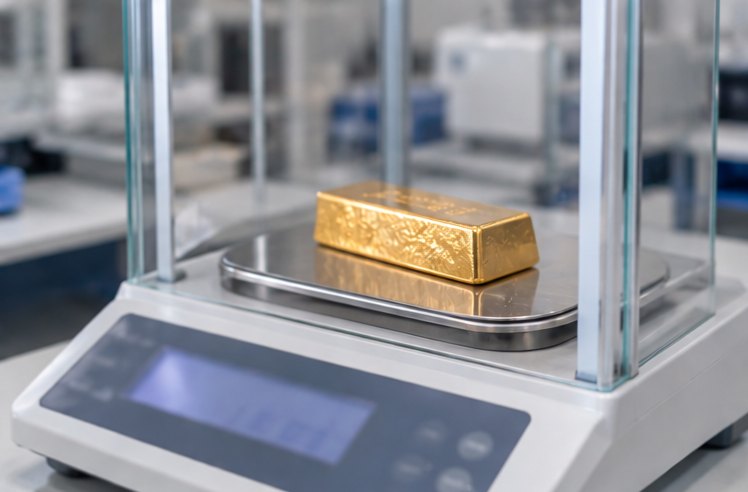
The lot is weighed by our tester on a calibrated scale, or a recent weight recorded by us under seal is used.
- STEP 02
Fineness
Fineness is taken from fire assay, or from our field testing where the parties agree an indicative value is enough.
- STEP 03
Fine gold content
Gross weight is multiplied by fineness to give fine gold weight, and converted to troy ounces.
- STEP 04
Price
The LBMA Gold Price for the agreed date and publication is applied.
- STEP 05
Report
You receive the value with every figure, source and conversion shown.
Scoping is free. We return a scope, timetable and terms within one business day.
Request this service
Detail
How the value is calculated
Fine gold weight (grams) = gross weight (grams) × fineness (parts per thousand) ÷ 1,000.
Fine gold weight (troy ounces) = fine gold weight (grams) ÷ 31.1035.
Value (US dollars) = fine gold weight (troy ounces) × LBMA Gold Price (US dollars per troy ounce).
Worked example, using an illustrative price P: a doré bar weighing 10,000.0 grams at a fineness of 920.0 contains 9,200.0 grams of fine gold, which is 295.78 troy ounces. Its value is 295.78 × P. Where the bar also carries silver, the silver may be valued in the same way against the LBMA Silver Price, and shown on its own line.
Weights and units
All weights are recorded in grams on a scale whose calibration is current, and the scale and its calibration reference are named in the report. Gold is traded in several units, and confusion between them is a frequent source of error: the troy ounce (31.1035 grams), on which the international price is quoted; the kilogram; and, in parts of East Africa and the Gulf trade, the tola (11.6638 grams). The report converts every figure into grams and troy ounces, and into any other unit the contract uses, with the conversion factor shown.
Fineness is expressed in parts per thousand — 999.9 for the purest bullion, commonly 750 to 950 for doré. Where fineness is given in carats, it is converted at 24 carats to 1,000 parts and the conversion shown.
Using the valuation in a sale
In a typical transaction the parties agree a provisional price on an indicative value at the time of testing, the lot is sealed and sent for assay, and final payment is calculated on the assayed fine content at the benchmark price for an agreed fixing date. Our valuation can be issued at each stage, with the same lot identification and seal numbers, so that the provisional and final figures can be reconciled line by line.
Where the parties have agreed deductions — refining charges, assay costs, transport and insurance, or a discount to the benchmark — we apply them in a separate schedule exactly as the contract states them. We do not suggest or negotiate deductions as part of a valuation; that is a commercial matter for the parties.
Indicative or settlement value
A valuation based on field testing is indicative: it is reliable enough to judge an offer or to agree a provisional price, but fineness from XRF and density is an estimate. A valuation based on fire assay is a settlement value, suitable for final payment. The report states which it is on its first page.
Local reference prices
Several African states publish their own gold reference prices or buy gold through a central bank or a state body, often at a price derived from the international benchmark and converted at the official exchange rate. Where a client is selling to such a programme, or a contract refers to a local reference price, we show that price and the conversion alongside the LBMA figure.
What the report contains
- Identification of the lot: pieces, bar numbers and seal numbers
- Gross weight of each piece and the scale used
- Fineness of each piece and its source: fire assay certificate number or field test
- Fine gold weight in grams and troy ounces
- The LBMA Gold Price used: date and publication
- The resulting value, and on request a separate schedule of contractual deductions
- Exchange rate and source, where a local currency figure is requested
Deliverables
- A written valuation of the lot on the agreed date
- The full calculation: weight, fineness, fine gold content, conversion and price
- The source of each figure — our weighing, our tests or the laboratory certificate
- Indicative or settlement status stated on the first page
Turnaround. Issued on the day of testing for an indicative value; within one working day of the assay certificate for a settlement value.
Why clients choose us
- Every figure in the calculation was recorded or confirmed by us, not supplied by a party.
- The calculation is shown in full, so either side can reproduce it.
- Nairank Global is independent of buyers and sellers. Its fees are outcome-neutral: they are the same whether or not the transaction proceeds. Our fee is agreed before work starts and is the same whatever we find.
Questions
Not answered here? Message the desk.
Which price do you use?
The LBMA Gold Price in US dollars per troy ounce, for the date and publication — morning or afternoon — agreed with you. It is named in the report.
How do you work out the fine gold content?
Gross weight multiplied by fineness in parts per thousand, divided by 1,000. The result in grams is divided by 31.1035 to give troy ounces.
Do you value gold without testing it?
Only if the fineness comes from an assay certificate we have confirmed with the issuing laboratory. We do not value on fineness stated by the seller.
What is the difference between an indicative and a settlement value?
An indicative value uses field-tested fineness and is suitable for judging an offer. A settlement value uses fire assay and is suitable for final payment.
Is the valuation a price offer?
No. The valuation is an independent calculation both sides can use to agree a price.
Do you include refining charges and other deductions?
On request, as a separate schedule following the terms of a stated contract. The metal value itself is always shown first and unaltered.
Can you show the value in local currency?
Yes. The conversion uses the official exchange rate for the date, and the rate and its source are stated.
What about silver in doré?
Silver can be valued against the LBMA Silver Price and shown on its own line. Whether it is payable depends on the contract.
Do you work in tolas or kilograms?
Every weight is recorded in grams and converted to troy ounces, and to tolas or kilograms if the contract uses them, with the conversion factor shown.
Which date’s price applies?
The date the contract names as the fixing date, or the valuation date if there is no contract. If the parties have not agreed, the report states the date and publication used, and can be reissued at another date on the same weights and fineness.
How quickly can I have it?
An indicative value on the day of testing. A settlement value within one working day of the assay certificate.
Can a financier rely on the valuation?
Yes. It is evidence of the metal value on the stated date, with its basis set out in full so any reader can check it.
Where we provide this
City and country pages with local detail: where our teams work, the authorities involved and how an engagement runs there.
- Gold testing in Dar es SalaamXRF, acid and density testing at dealers, vaults and the airport, with fire assay and sealed lots.
- Gold testing in MwanzaTesting at Lake Zone mineral markets, dealers and refineries, with witnessed melts and fire assay.
- Gold testing in NairobiGold tested in Nairobi vaults and dealers’ premises, with vault and licence confirmation.
- Gold testing in FreetownGold testing in Freetown and the provinces, with NMA licence and CAC company checks on the seller.
Related practice areas
Gold Testing & Assaying
Gold Melt Supervision & Sampling
Document & Certificate Verification
Field guidance
Country pages and buyer guides where this work applies.
Gold Valuation
Brief us on the requirement and the location. We return a scope, a timetable and terms within 24 hours, in confidence.