What is mineral inspection?
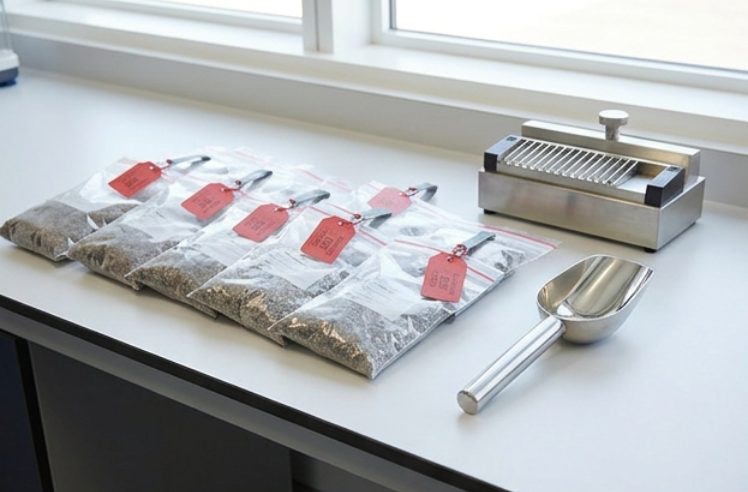
Mineral inspection is the independent confirmation, on site, that a mineral lot exists and matches its description: the quantity, the quality, the packing, the marks and the condition. The inspector records what is physically there, draws and seals samples for the laboratory where grade matters, and reports the result as conforming or not conforming to the agreed specification.
Inspection is the physical half of a buyer’s checks. The other half — whether the supplier is real, licensed and entitled to sell — is supplier due diligence. Most first transactions need both.
Why inspect at source rather than at the port?
By the time a lot reaches the port, the contract is usually signed and payment is committed. Inspection at the mine or warehouse comes earlier, while the buyer can still walk away. It also answers questions a port inspection cannot: whether the operation is real, whether the stockpile is the size claimed, and whether the material belongs to the seller.
What does a warehouse and stockpile inspection cover?
At a warehouse or stockyard our inspector confirms that the lot exists and is the one described, then records:
- The count — bags, bundles, drums or bars — against the packing list.
- The weight, on a calibrated scale or by agreed measurement for bulk material.
- Marks, brands, lot numbers and tags.
- Packing and condition, including moisture and contamination where visible.
- Who controls the store, and whether the material is held in the seller’s name.
What happens at a mine-site inspection?
A mine-site inspection confirms that the operation the supplier describes exists and can produce what it offers. The inspector checks the site against its mining title, observes the operation and its scale, records equipment, stockpiles and processing, and photographs everything with dates and locations. The result tells a buyer whether the supply story holds up on the ground.
What is a witnessed melt and sampling?
Raw, alluvial or scrap gold is melted into a bar at a licensed facility in front of our tester. The material is weighed in, a sample is taken from the melt, and the bar is weighed out, numbered and sealed. Both weights are recorded, so the bar that changes hands carries its own assay. Witnessed gold melt and sampling.
How are copper cathode and concentrate inspected?
Copper cathode is checked bundle by bundle for producer brand, count, weight and condition, and tested by XRF; where the contract requires it, samples go for chemical analysis against LME Grade A / ASTM B115. Copper concentrate is sampled across the lot, following ISO 12743, for grade and moisture, because both decide the payable weight. Cobalt hydroxide is sampled the same way. Copper sampling and laboratory testing.
How are quantity and quality checked?
Quantity is established by count and weight: units counted against the packing list, then weighed on calibrated scales or, for bulk, measured by an agreed method. Quality is established by field tests where they are reliable — XRF, acid and density for gold, XRF for cathode — and by laboratory analysis of sealed samples where the price depends on grade. Results are stated as conforming or not conforming to the agreed specification.
How are seals and photographs used?
Every sampled lot and every sample is sealed with a numbered, tamper-evident seal, and every seal number goes into the report. The inspector photographs the lot, the marks, the weighing and the sealing, with date and location recorded. The seals let anyone later in the chain check that the material is the material that was inspected.
Which minerals do you inspect, and how?
| Mineral | Existence and quantity | Quality | Laboratory |
|---|---|---|---|
| Gold (doré, bars, nuggets, dust) | Count, weight, seal | XRF, acid and density on site | Fire assay (ISO 11426) |
| Copper cathode | Bundle count and weight, brand marks | XRF, visual condition | Chemical analysis vs LME Grade A / ASTM B115 |
| Copper concentrate | Bag count or stockpile measurement | Sampling for grade and moisture (ISO 12743) | Cu content and moisture |
| Cobalt hydroxide | Bag count and weight | Sampling for grade and moisture | Co content and moisture |
| Coltan (tantalite) | Bag count, weight, tags | Sampling | Ta₂O₅ content |
| Lithium (spodumene, lepidolite) | Stockpile or bag count and weight | Sampling | Li₂O content |
Where do your inspection teams work?
| Country | Cities and areas | Location page |
|---|---|---|
| Tanzania | Dar es Salaam, Mwanza, Geita | Tanzania |
| Kenya | Nairobi, Mombasa | Kenya |
| Uganda | Kampala, Entebbe | Uganda |
| Zambia | Lusaka, the Copperbelt | Zambia |
| DR Congo | Lubumbashi, Kolwezi | DR Congo |
| Ghana | Accra, Kumasi | Accra |
| Sierra Leone | Freetown | Freetown |
From these bases our inspectors deploy anywhere in Africa where the material is held.
Which standards do inspections follow?
- Inspections are carried out to the requirements of ISO/IEC 17020.
- Laboratory testing is done by laboratories accredited to ISO/IEC 17025.
- Gold fire assay follows ISO 11426; copper concentrate sampling follows ISO 12743.
- Results are stated against the agreed specification — LBMA standards for gold fineness, LME Grade A / ASTM B115 for copper cathode.
How long does an inspection take?
| Step | Time |
|---|---|
| On-site inspection or testing | Team on site within 48–72 hours after access is confirmed |
| XRF, acid and density results | Same day, on site |
| Written inspection report | Within 2 business days of the visit |
| Fire assay at an accredited laboratory | 3–5 business days after the sample reaches the lab |
Times start once we have the supplier’s details and, for site work, confirmed access.
What does the inspection report contain?
The client receives an independent inspection report: what was inspected, where and when, by whom; the counts, weights and readings; the seal numbers; the photographs; and the result against the agreed specification. Where samples were analysed, the laboratory certificate is addressed to the client. The report can be confirmed as genuine through our document verification service.
How are inspection fees set?
Fees depend on the site and travel, the quantity and number of lots, the laboratory tests needed and the urgency. A fixed quote is agreed before work starts. Fees are outcome-neutral: the same whether the lot conforms or not, and whether or not the transaction proceeds.