What is pre-shipment inspection for minerals?
Pre-shipment inspection (PSI) is the last independent check before a mineral lot leaves the seller’s control. The inspector confirms that the goods being loaded are the goods in the contract — the right quantity, the right grade, correctly packed and marked — and seals and records them so the shipment can be traced to the inspection.
It complements, and does not replace, the checks made before the contract is signed: supplier due diligence on the company and inspection at source of the lot.
What is checked before loading?
- Weight — on calibrated scales or a certified weighbridge, with the equipment recorded.
- Count — bags, bundles, drums or bars against the packing list.
- Marks — producer brands, lot numbers, bag tags and export marks.
- Grade — field tests where reliable, and samples drawn and sealed for the laboratory.
- Packing — bag condition, strapping, palletising and protection from moisture.
- Seals — numbered seals on bags, bundles and containers.
- Container numbers — recorded against the seal numbers and the lot.
Where does pre-shipment inspection take place?
Wherever the lot is prepared for export: at the mine, at a bonded warehouse, or at the inland and port hubs the trade passes through. Our teams work at:
| Hub | Typical cargo |
|---|---|
| Dar es Salaam (Tanzania) | Copper and cobalt in transit from Zambia and the DR Congo; Tanzanian minerals |
| Lusaka and the Copperbelt (Zambia) | Copper cathode and concentrate |
| Lubumbashi (DR Congo) | Copper cathode, concentrate and cobalt hydroxide |
| Mombasa (Kenya) | Minerals exported through the Kenyan coast |
| Accra and Tema (Ghana) | West African minerals for export |
Who appoints the pre-shipment inspector?
Usually the buyer, because the buyer pays against documents and needs independent proof that the shipment matches the contract. Sometimes the contract names an inspector agreed by both sides, or a bank financing the trade asks for one. Nairank Global reports to the party that appoints it; if both sides appoint us jointly, the scope says so and both receive the report.
How does pre-shipment inspection fit with a letter of credit?
A letter of credit pays against documents, not goods. If the credit requires an inspection report from a named independent inspector, the bank pays only when that report is presented and matches the credit’s terms. Naming the inspector and the content of its report in the credit is one of the most effective protections a buyer has. The report should state the quantity, grade, marks and seal numbers in the same terms the credit uses.
How does pre-shipment inspection fit with the SPA?
The sale and purchase agreement should say who appoints the inspector, where and when the inspection takes place, what is checked, which specification applies, who receives the report and what happens if the lot does not conform. Fixing these points before signing avoids disputes at the port, when the cargo is ready and money is waiting.
How are samples drawn and sealed?
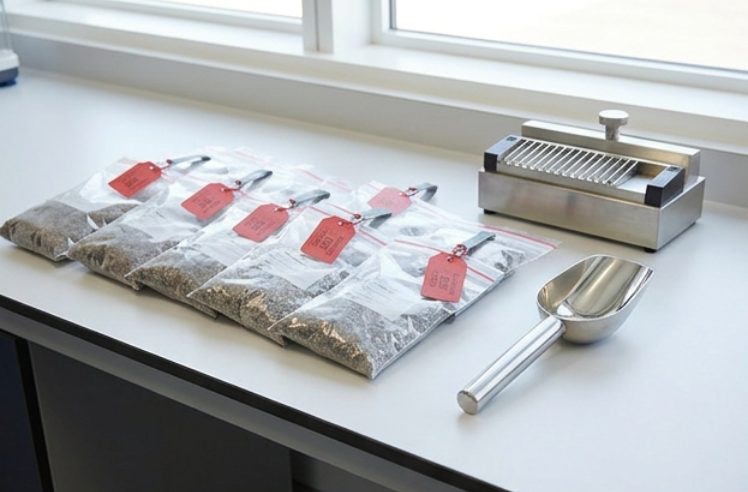
Samples are drawn across the lot so they represent it — copper concentrate sampling follows ISO 12743 — then split, sealed with numbered seals and photographed. One set goes to a laboratory accredited to ISO/IEC 17025; others can be held for the seller and for an umpire laboratory if the parties disagree.
How is the weight established?
By weighing on calibrated scales or a certified weighbridge, with the equipment and its calibration recorded. For concentrate and hydroxide, moisture is determined from samples taken at the time of weighing, because the payable weight is the dry weight.
How are containers and seals recorded?
The inspector records each container number, the seal number applied to it and the bags or bundles loaded into it, and photographs the container before and after sealing. The record lets the buyer match every container on the bill of lading to the inspected lot.
What report and photographs does the client receive?
An independent inspection report stating the quantity, the field results, the marks, the packing, the seal and container numbers and the result against the agreed specification, with dated photographs of the lot, the weighing, the sampling and the sealing. Laboratory certificates follow, addressed to the client.
How is pre-shipment inspection different from supplier due diligence?
Pre-shipment inspection checks the goods; supplier due diligence checks the company. A genuine cargo can still come from a seller with no right to sell it, and a genuine company can still ship the wrong goods. For a first transaction, both are needed — and the due diligence is worth most before the contract is signed.
How long does pre-shipment inspection take?
| Step | Time |
|---|---|
| On-site inspection or testing | Team on site within 48–72 hours after access is confirmed |
| XRF, acid and density results | Same day, on site |
| Written inspection report | Within 2 business days of the visit |
| Fire assay at an accredited laboratory | 3–5 business days after the sample reaches the lab |
Times start once we have the supplier’s details and, for site work, confirmed access.
How are pre-shipment inspection fees set?
Fees depend on the location and travel, the number of containers or lots, the laboratory tests needed and the urgency. A fixed quote is agreed before work starts. Fees are outcome-neutral: the same whether or not the lot conforms.
Which minerals can be inspected before shipment?
Copper cathode and concentrate, cobalt hydroxide, gold, coltan, tin and tungsten ores, lithium concentrate, manganese and other industrial minerals. Mineral inspection in Africa sets out how each is inspected.