

Standards & Quality Assurance

    International methods, independent evidence

    Every engagement is assessed under the Nairank Global Standard, which covers the counterparty, the material and the paperwork. Inspections are carried out to the requirements of ISO/IEC 17020, laboratory testing is done by laboratories accredited to ISO/IEC 17025, and due diligence follows the OECD Due Diligence Guidance. The client receives a report stating every result in international terms.

    Nairank Global Standard (NGS)

    What the Nairank Global Standard covers

    The Nairank Global Standard (NGS) is Nairank Global’s due diligence framework for assessing mineral suppliers, their lots and their documents before a client commits money. Full NGS criteria are shared with clients under engagement.

    Company and licence records checked at the registry
    01

    The counterparty

    Who you are dealing with, and whether they are who they say they are.
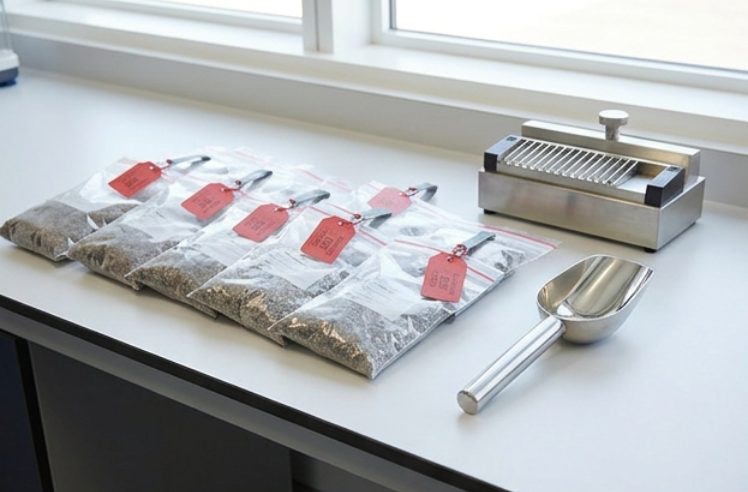
    Sealed sample bags with numbered tamper-evident seal tags
    02

    The material

    Whether the lot exists, and what it is — confirmed at source and, where it matters, by laboratory.
    Transaction documents checked against their issuers
    03

    The paperwork

    Whether the documents behind the deal stand up.

    Reference standards

    The international standards it follows

    • Inspections are carried out to the requirements of ISO/IEC 17020.
    • Laboratory testing is done by laboratories accredited to ISO/IEC 17025.
    • Gold fire assay follows ISO 11426; copper concentrate sampling follows ISO 12743.
    • Due diligence follows the OECD Due Diligence Guidance five-step framework and LBMA responsible gold guidance.

    ISO/IEC 17020:2026

    Requirements for bodies performing inspection

    What it addresses
    The competence, impartiality and consistency of organisations that inspect products, lots and installations. The third edition was published in March 2026, replacing the 2012 edition.
    Where it applies
    Inspection activity: attending a mine, warehouse, stockpile or port, identifying and counting the lot, weighing, witnessing sampling and sealing, and reporting what was found.
    Why it matters
    It is the international reference for how an inspection body should be organised — independence from the parties, trained and supervised inspectors, controlled procedures, traceable records and clear reports.
    How Nairank Global follows it
    Inspections are carried out to the requirements of ISO/IEC 17020. Each report identifies the inspector, the date, the location and what was inspected.

    ISO/IEC 17025:2017

    General requirements for the competence of testing and calibration laboratories

    What it addresses
    Whether a laboratory is competent to produce valid results for specific tests — method validation, equipment calibration, measurement uncertainty, quality control and impartiality.
    Where it applies
    Laboratory analysis: fire assay of gold, chemical analysis of copper and cobalt concentrates, moisture determination, ICP and XRF laboratory methods.
    Why it matters
    Accreditation is granted test by test, not to a laboratory as a whole. A laboratory certificate is only as strong as the accreditation scope that covers the exact test performed.
    How Nairank Global follows it
    Laboratory testing is done by independent laboratories accredited to ISO/IEC 17025 for the test required. The report names the laboratory, the method and its accreditation.

    ISO 11426

    Determination of gold in gold alloys — cupellation (fire assay) method

    What it addresses
    The reference cupellation (fire assay) method for determining the gold content of gold alloys.
    Where it applies
    Gold bars and alloys. Laboratories apply fire assay to doré and other gold materials within their own accredited methods.
    Why it matters
    Fire assay remains the reference method for gold content. Handheld XRF reads the surface and can be misled by plating or a coated core; fire assay measures the sample as a whole.
    How Nairank Global follows it
    Gold fire assay follows ISO 11426. On-site XRF, acid and density tests screen the lot; the figure a sale is settled on comes from fire assay at an accredited laboratory.

    ISO 12743:2021

    Copper, lead, zinc and nickel concentrates — sampling procedures for metal and moisture content

    What it addresses
    How to take representative samples from concentrate lots, moving or stationary, so that metal content and moisture can be determined.
    Where it applies
    Copper, lead, zinc and nickel concentrates in bags, stockpiles, wagons and holds. Slurries are covered by a separate standard.
    Why it matters
    Concentrates are paid on laboratory grade and dry weight. A sample that does not represent the lot moves money from one party to the other, whatever the laboratory reports.
    How Nairank Global follows it
    Copper concentrate sampling follows ISO 12743 and the terms of the contract, so that the grade and the dry weight a sale is paid on rest on a representative sample.

    OECD Due Diligence Guidance

    Responsible supply chains of minerals from conflict-affected and high-risk areas

    What it addresses
    A five-step framework for identifying and managing risks in mineral supply chains — conflict financing, serious human-rights abuses, bribery, money laundering and misrepresentation of origin.
    Where it applies
    Gold and the 3T minerals (tin, tantalum, tungsten) above all, and increasingly cobalt and other minerals sourced from high-risk areas.
    Why it matters
    Refiners, smelters, banks and end buyers expect suppliers to be assessed against it, and many regulations reference it.
    How Nairank Global follows it
    Due diligence follows the OECD Due Diligence Guidance five-step framework and, for gold, the LBMA Responsible Gold Guidance. Supplier risk is rated Low, Medium or High against the OECD red flags.

    LBMA Good Delivery · ICGLR RCM

    Market and regional frameworks

    What it addresses
    LBMA Good Delivery lists refiners whose gold and silver bars meet the London market’s standards. The ICGLR Regional Certification Mechanism certifies tin, tantalum, tungsten and gold exports in the Great Lakes region.
    Where it applies
    Refined bars sold into the London market; 3T and gold exports from ICGLR member states such as the DR Congo, Rwanda, Uganda and Tanzania.
    Why it matters
    Buyers often need to know whether a refiner is listed, or whether an export carries a valid regional certificate.
    How Nairank Global follows it
    Gold fineness is stated against LBMA standards. Listings and regional certificates are confirmed with the body that issued them, and the report says what was confirmed.

    What the client receives

    Results stated in international terms, in a report addressed to the client. NGS assessment reports and independent inspection reports are issued by Nairank Global Limited, and any of them can be confirmed through Nairank Global’s document verification service.

    Inspection and testing

    Conforming · Not conforming to the agreed specification

    Gold fineness is stated against LBMA standards and copper cathode against LME Grade A / ASTM B115, with the method named and every result in its units.

    Due diligence

    Proceed · Proceed on conditions · Do not proceed

    The supplier’s risk is rated Low, Medium or High against the OECD red flags, and the report closes with a written recommendation, with any conditions drafted for the contract.

    01

    Assessed under the Nairank Global Standard

    The supplier was assessed against the Nairank Global Standard, and the findings are set out in an NGS assessment report. Refers to the report and its date, and can be confirmed on our document verification page.
    02

    Independent inspection report

    A specific lot was inspected, sampled and sealed by Nairank Global, with the laboratory result and seal numbers recorded. Identifies the lot, its seals and the laboratory that analysed it.
    Report areaHow it is stated
    Material identificationIdentified as declared / not confirmed
    Chemical compositionLaboratory results, with units, method and laboratory named
    SamplingThe reference standard followed, with seal numbers
    QualityConforming / not conforming to the agreed specification — gold fineness against LBMA standards, copper cathode against LME Grade A / ASTM B115
    QuantityMeasured weight, count or volume, with the equipment used
    DocumentationConfirmed with issuer / discrepancy / could not be confirmed
    InspectionConforming / not conforming, with observations
    Due diligenceRisk rated Low / Medium / High against the OECD red flags; recommendation: proceed, proceed on conditions or do not proceed

    Documents issued: NGS assessment reports and independent inspection reports, with certificates of analysis from the accredited laboratory, addressed to the client.

    Questions about standards and reports

    Which standards does Nairank Global follow?

    Inspections are carried out to the requirements of ISO/IEC 17020. Laboratory testing is done by laboratories accredited to ISO/IEC 17025. Gold fire assay follows ISO 11426; copper concentrate sampling follows ISO 12743. Due diligence follows the OECD Due Diligence Guidance five-step framework and LBMA responsible gold guidance.

    What is the difference between mineral inspection and laboratory testing?

    Inspection establishes what is physically there — identity, count, weight, condition, marks and seals — at the site, by an inspector. Laboratory testing establishes what the material is made of, on a representative sample, by an accredited laboratory. A sound transaction usually needs both.

    Which standards apply to mineral sampling and assaying?

    It depends on the commodity. ISO 12743 covers sampling of copper, lead, zinc and nickel concentrates for metal and moisture; ISO 11426 is the cupellation (fire assay) method for gold alloys; laboratories should hold ISO/IEC 17025 accreditation for the specific test. Contracts often add their own specification and umpire arrangements.

    How does a Nairank Global report state its conclusions?

    Inspection and testing results are stated as conforming or not conforming to the agreed specification, with every result in its units and the method named. Due diligence rates the supplier’s risk Low, Medium or High against the OECD red flags and closes with a written recommendation: proceed, proceed on conditions, or do not proceed.

    Is the Nairank Global Standard published?

    Its scope is: the counterparty, the material and the paperwork, assessed against the international standards on this page. Full NGS criteria are shared with clients under engagement.

    How can a third party confirm a Nairank Global report is genuine?

    Through our document verification service, using the report reference. We confirm whether the report was issued by Nairank Global, and the contents stay confidential to the client.

    Related: mineral and metal testing · copper sampling and laboratory testing · XRF versus fire assay · supplier due diligence

    Request an inspection or due diligence

    Tell us the commodity, where it is held and what the contract requires. We return a scope, the applicable methods and a fee within one business day.